
Competitive racing demands the highest levels of safety equipment, and racing safety belts stand as the most critical component protecting drivers during high-speed competitions. These specialized restraint systems differ significantly from standard automotive seat belts, incorporating advanced materials, precise engineering, and rigorous testing protocols that meet the extreme demands of motorsport environments. Professional drivers understand that their choice in safety equipment can mean the difference between walking away from an accident and suffering life-threatening injuries.
Advanced Construction and Materials
High-Tensile Strength Webbing
The foundation of effective racing safety belts lies in their superior webbing construction, utilizing materials that far exceed the strength requirements of conventional automotive belts. Modern racing harnesses employ polyester or nylon webbing with tensile strengths ranging from 6,000 to 9,000 pounds per strap, ensuring they can withstand the tremendous forces generated during high-speed impacts. This advanced webbing undergoes specialized treatments to resist UV degradation, moisture absorption, and thermal stress, maintaining its integrity even under extreme racing conditions.
The weaving pattern of these materials incorporates specific thread counts and densities that maximize load distribution across the belt width. This engineering approach prevents concentrated stress points that could lead to failure during an accident. Additionally, the webbing features reinforced edge stitching using high-strength threads that match or exceed the primary material specifications, creating a unified system capable of protecting drivers across various racing disciplines.
Precision Hardware Components
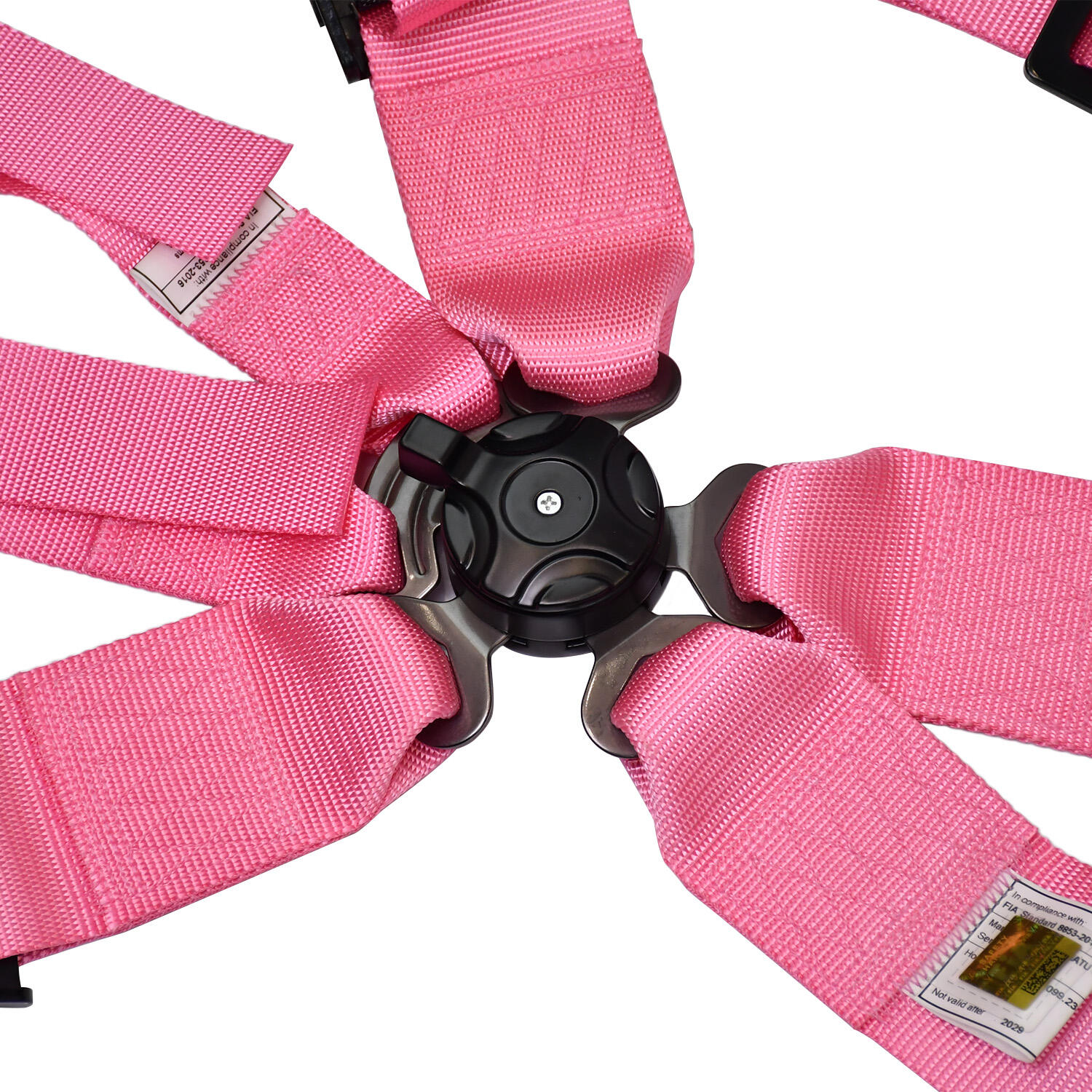
Racing safety belts incorporate specialized hardware manufactured from aircraft-grade materials, typically featuring aluminum or steel construction with precise tolerances that ensure reliable operation under extreme conditions. The buckle mechanisms employ cam-lock or rotary-release systems that provide secure engagement while allowing rapid release when necessary. These components undergo extensive testing for corrosion resistance, mechanical wear, and operational reliability across temperature ranges commonly encountered in racing environments.
The shoulder strap adjusters utilize sophisticated mechanisms that maintain proper tension while accommodating driver movement during competition. These adjusters feature self-locking capabilities that prevent gradual loosening during extended racing sessions, ensuring consistent protection throughout the event. The hardware attachment points integrate seamlessly with roll cage mounting systems, distributing loads effectively across the vehicle structure rather than concentrating forces on individual mounting points.
Multi-Point Restraint Systems
Four-Point Configuration Benefits
Four-point racing safety belts provide enhanced protection compared to traditional three-point automotive systems by incorporating dedicated shoulder straps that work independently of the lap belt components. This configuration distributes impact forces more effectively across the driver's torso, reducing the risk of submarining and upper body movement during frontal impacts. The separate shoulder straps maintain proper positioning over the clavicle area, directing forces into the strongest portions of the skeletal structure while avoiding soft tissue damage.
The geometric advantages of four-point systems become particularly evident during side impacts and rollover situations, where the independent shoulder straps help maintain driver position within the protective envelope of the roll cage. This positioning reduces the likelihood of contact with interior surfaces or intrusion of external objects during complex accident scenarios. Professional racing organizations frequently mandate four-point minimum configurations for competitive events, recognizing their superior protective capabilities.
Five and Six-Point Advanced Systems
Advanced racing applications often utilize five or six-point harness systems that incorporate additional restraint points for maximum driver security. Five-point systems add a submarine belt that passes between the driver's legs, preventing downward movement during severe frontal impacts. This additional restraint point works in conjunction with the lap belt to create a more secure lower body restraint system, particularly important in open-wheel and formula racing applications where driver seating positions create unique loading scenarios.
Six-point configurations extend this concept by incorporating dual submarine straps, providing redundancy and improved load distribution for the most demanding racing applications. These systems require precise adjustment and professional installation to ensure proper geometry and optimal protection. The additional complexity provides enhanced security for drivers participating in high-risk racing disciplines, including drag racing, road racing, and other professional motorsport categories where maximum protection justifies the increased system complexity.
Certification and Safety Standards
FIA Homologation Requirements
The Fédération Internationale de l'Automobile establishes comprehensive standards for racing safety belts used in international competition, requiring extensive testing and documentation before products receive homologation approval. These standards specify minimum strength requirements, testing protocols, and manufacturing quality controls that ensure consistent performance across different racing applications. FIA-approved belts undergo dynamic testing that simulates actual crash conditions, including multiple impact scenarios and varying load directions.
The homologation process includes detailed inspection of manufacturing facilities, quality control procedures, and ongoing batch testing requirements that maintain consistent product quality throughout the production lifecycle. This comprehensive approach ensures that racing safety belts meet the demanding requirements of professional motorsport while providing reliable protection for drivers across various racing disciplines. The FIA certification carries significant weight in the racing community, with many sanctioning bodies requiring FIA-approved equipment for competitive events.
SFI Foundation Specifications
The SFI Foundation provides additional certification standards widely recognized in North American racing circles, establishing specific testing protocols and performance requirements for racing safety belt systems. SFI specifications address unique aspects of American racing disciplines, including oval track racing, drag racing, and road course applications that may not be fully covered by international standards. These specifications often incorporate higher safety margins and more stringent testing requirements than minimum regulatory standards.
SFI-certified racing safety belts undergo regular recertification processes that ensure continued compliance with evolving safety standards and technological improvements. The foundation maintains detailed records of certified products and provides verification services that help racing organizations and individual competitors confirm equipment authenticity and compliance. This systematic approach supports the continuous improvement of racing safety equipment while maintaining clear standards for competitive use.
Installation and Mounting Considerations
Proper Anchor Point Placement
Effective racing safety belt installation requires careful consideration of anchor point locations to ensure optimal load distribution and proper restraint geometry. Shoulder strap anchor points must be positioned behind the driver's shoulders at angles that direct impact forces into the vehicle structure rather than creating upward or forward loading that could compromise restraint effectiveness. The ideal shoulder strap angle ranges from 10 to 25 degrees below horizontal, providing optimal force distribution while maintaining driver comfort during normal operation.
Lap belt anchor points require positioning that creates proper belt routing across the pelvic bones rather than soft abdominal tissue, ensuring effective load transfer during frontal impacts. The mounting hardware must be capable of withstanding forces significantly higher than the belt rating, typically requiring 15,000-pound minimum strength for each anchor point. Professional installation often involves reinforcement of mounting areas to distribute these loads effectively throughout the vehicle structure.
Integration with Roll Cage Systems
Modern racing applications integrate safety belt mounting with comprehensive roll cage systems that provide structural support for the extreme forces generated during accidents. The roll cage design must incorporate specific mounting provisions for racing safety belts, ensuring that restraint loads are distributed effectively throughout the protective structure. This integration requires careful engineering to balance structural strength with weight considerations, particularly important in competitive racing where every pound affects performance.
The mounting system design must account for various loading scenarios, including frontal impacts, side impacts, and rollover situations that create different force vectors and loading patterns. Professional cage builders incorporate reinforced mounting plates and strategic bracing that supports belt loads while maintaining the overall structural integrity of the protective system. This comprehensive approach ensures that racing safety belts can provide maximum protection when integrated properly with vehicle safety systems.
Maintenance and Replacement Protocols
Regular Inspection Requirements
Racing safety belts require systematic inspection protocols to identify wear, damage, or deterioration that could compromise their protective capabilities during competition. Visual inspections should examine the webbing for cuts, abrasion, UV damage, or chemical contamination that might reduce material strength. The hardware components require checking for proper operation, wear patterns, and corrosion that could affect reliability during critical moments.
Professional racing organizations often specify minimum inspection frequencies and documentation requirements for safety equipment, including detailed logbooks that track belt usage, inspection results, and maintenance actions. These protocols help ensure that racing safety belts maintain their protective capabilities throughout their service life while providing clear records for safety officials and technical inspectors.
Service Life and Replacement Guidelines
Racing safety belts have finite service lives determined by usage patterns, environmental exposure, and manufacturer recommendations that typically range from two to five years depending on specific applications and certification requirements. High-use racing applications may require more frequent replacement due to the accumulated stresses and environmental exposure associated with competitive racing. Professional teams often maintain detailed usage logs that track belt exposure to help determine optimal replacement intervals.
The replacement decision must consider not only chronological age but also usage intensity, accident history, and any signs of deterioration that might compromise safety performance. Racing safety belts that have been involved in accidents, even minor ones, typically require immediate replacement since impact loading can cause internal damage that may not be visible through standard inspection procedures. This conservative approach ensures maximum protection for drivers who depend on their safety equipment for survival in high-risk racing environments.
FAQ
How often should racing safety belts be replaced
Racing safety belts should typically be replaced every 2-3 years for regular competition use, or according to the manufacturer's specific recommendations and sanctioning body requirements. Belts involved in any accident should be replaced immediately, regardless of visible damage, since impact forces can compromise internal structural integrity that may not be apparent during visual inspection.
Can standard automotive seat belts be used for racing applications
Standard automotive seat belts are not suitable for racing applications due to insufficient strength ratings, improper mounting configurations, and lack of appropriate certification for motorsport use. Racing safety belts are specifically engineered to handle the extreme forces encountered in competitive racing and must meet specialized standards that far exceed automotive requirements.
What is the difference between 4-point and 6-point racing harnesses
Four-point harnesses include two shoulder straps and a lap belt, while 6-point systems add dual submarine straps that prevent downward movement during frontal impacts. Six-point systems provide enhanced protection for high-risk racing applications but require more complex installation and adjustment procedures to ensure proper fit and function.
How should racing safety belts be properly adjusted for maximum protection
Racing safety belts should be adjusted to eliminate slack while allowing normal breathing and operation of controls. The shoulder straps should cross at mid-chest level, the lap belt should sit low across the hips rather than the abdomen, and all straps should be tightened to remove excess webbing without creating uncomfortable pressure that might encourage loosening during competition.